Tips for Teaching Early Years Music
30th April 2026
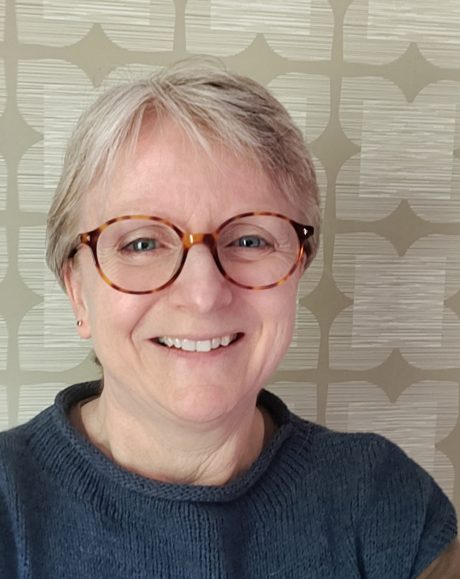 As part of our launch for the ‘Early Years | A Common Approach‘, Music Mark has worked closely with a number of Early Years music specialists to develop a programme of resources for music teachers who are starting to work with early years children for the first time. In this Q&A, Sarah Wise, a member of the Steering Group who worked to create this new area of the programme, shares insights from the development process and advice for using the resources in practice.
Say a little about how you came to teaching music in the early years and how this affects your practice.
I find myself working in the wonderful world of early childhood music education as a result of studying for a 4 year B.Ed at what was then the Roehampton Institute which included Froebel College. If the whole area of early years is new to you, it is well worth exploring Friedrich Froebel. The person who coined the phrase ‘Kindergarten’ was born in Germany in 1782 … yes, 1782! He believed that children learn best through exploring and viewed play as ‘the highest expression of human development in childhood’. Froebel advocated that children should direct their own play following their curiosities and that it is the role of the adults to provide safe, nurturing environments in which this child-initiated play could happen.
Curiously, with this theory ingrained, music was the one subject where I took full charge. The children sat in a circle and followed my plan. I believed my sessions were child-centred – singing, moving, listening, playing – aiming to progress their learning. I was polite when a child suggested a song, but if it wasn’t on my plan, we rarely sung it. And, mindful of noise and potential breakages, instruments were rarely part of their free choice play (Continuous Provision). Early childhood music educators will wince at this, but I know I was not alone in this approach.
My first job was as a Year 1 teacher, and it was simply assumed – by colleagues and, to some extent, by me – that because I could play the piano, I understood music education. As it turned out, not really… though singing in assemblies was always fabulous!
After 20 years in various schools as a class teacher in Year 2, Year 1, Reception and Nursery classes and doing supply work, I realised there was both a need in schools and a personal desire to specialise in music. I had banked courses and conferences along the way and learned from some fantastic practitioners, including the legendary Sue Nicholls, but I still felt I did not know enough about the progression of learning in music, so I completed a Kodaly inspired course with the Voices Foundation and have spent the past 15 years further developing my practice as a music educator.
The Common Approach for Early Years is full of ideas to aid planning, and has an eye on progression, yet it also emphasises the importance of following the needs of the children, can you suggest how to manage this apparent dichotomy?
The needs of the children must lie at the heart of all provision. When I am the class teacher, I now ensure that children can always access instruments as part of Continuous Provision (more to say on this – one for another time), but this new resource acknowledges that, as visiting teachers, often the expectation of settings is that we teach the children as a group. We want to plan for the needs of the individuals, but we barely know them. We would like them to choose their instrument, but many settings rely on us bringing everything, which, depending on how strong we’re feeling, results in e.g. all playing shakers, all playing claves, or a very limited free choice selection.
However, whilst the opportunity to explore and create is vital, group time also matters. As Jessica Pitt recently wrote in Music Teacher magazine, the adult-led session ‘brings all the humans to share time, to experience musically coordinated time together. This offers a collective experience of attunement that is beyond words. I would argue that this is what group music-making offers for any group, irrespective of age or stage’.
So we should be confident – we are not the once a week ‘special visitor’, we are group leaders who complement the wider opportunities of the setting, and the bottom line is that this session must be planned, but that this plan must be flexible:
- Plan your repertoire, but be ready to linger and follow children’s ideas. This week, I played a ‘tick-tock’ pulse on a tone block during a ‘Hello’ song and suggested knee‑patting. A child began clapping, so I encouraged others to follow. Soon we had a whole set of creative actions, and the song lasted far longer than planned. If something else on your plan has to give, that’s fine.
- Plan for repetition so children grow in confidence over time. Some will simply watch during the first sessions and join in later, on their own terms. Participation isn’t always singing or dancing; it can be observing, listening, or choosing when to engage.
- Plan to give children time with instruments. Expect them to explore in ways that include putting it in their mouth or testing to near destruction. Offer calm, positive redirection: ‘Gently… can you shake it quietly near your ear?’
- Plan focused exploration of instrument types (strike, shake, scrape, blow) and link these to songs and activities — but stay alert to children’s creative choices. You might demonstrate holding a triangle by the string, but a child may hold the frame instead. It isn’t wrong; it’s simply another way to play.
- Plan for variety. Young children can concentrate for long periods when following their own path, but this is harder in a group. To maintain engagement, change level, tempo and dynamics: sit, stand, lie, dance, whisper, start, stop — and follow the children’s lead whenever possible.
Can you share some insight into how the six Principles were agreed upon, and is there one Principle that you think really stands out?
As the Steering Group talked, it became clear that, despite our varied experience, there were recurring themes which it was agreed would be presented as Principles. These Principles are woven throughout, but presenting them separately keeps the pedagogy front and centre to aid users as they grow familiar with the material and develop their own delivery style.
If I had to choose one Principle, it would be that every child is a musician — an idea importantly included in the revised National Plan for Music Education. Too often we hear talk of ‘talent’, even with regard to very young children, but this must be understood in the context of their experiences. A child may have been sung to in the womb, may play drums at church, or may regularly sing and dance at home. Another may have no musical experiences at all until they arrive in nursery or school. Our role is to give every child the chance to explore, play, and develop the talents innate in all of us.
Settings work to the standards set out in the Early Years Foundation Stage statutory framework, can you explain where music sits in this framework and what setting practitioners might therefore expect from a visiting music teacher?
Interesting question – music is seriously underrepresented in the Framework. The supporting materials highlight the benefits of songs in terms of developing communication and language, the role of counting songs, etc, but mainly position music as a tool for other Areas of Learning rather than an area in its own right.
Music sits within ‘Expressive Arts and Design’ which contains two Early Learning Goals, Creating with Materials (a missed opportunity here as the addition of the words ‘instruments’ and ‘sound makers’, could so easily promote lots of improvising/composing) and Being Imaginative and Expressive. This second goal states that children at the ‘expected level’ will:
- Sing a range of well-known nursery rhymes and songs
- Perform songs, rhymes … with others and – when appropriate – try to move in time with music
These are goals, not a curriculum, but children still need regular opportunities to develop the skills they describe. It’s understandable that early years colleagues may request nursery rhymes, and with my English teacher hat on, nursery rhymes are vital in developing skills in literacy (rhyme, storytelling, etc) and culturally. However, nursery rhymes are often not the right repertoire in terms of developing musical skills such as pitch matching – think of the range and complexity of the melody of Hickory Dickory Dock, which is great for confident adults to sing and as a movement piece (young children love a spot of compound time), but really tricky for an inexperienced singer, adult or child, to sing accurately. If pitch matching is the aim, choose songs from, for example, a Kodaly-inspired resource, and explain to colleagues why these choices matter.
A second issue is the word ‘perform’. Practitioners often ask whether it requires an audience or a polished outcome. In reality, performing simply means singing or playing — rehearsed or spontaneous, with or without an audience. Clarifying this helps colleagues feel more confident and reduces unnecessary pressure. And frankly, if you are under 5 (or indeed nearer 60!), when is it not appropriate to try and move in time to music?
What do you enjoy most about working in Early Years settings?
3 year olds are busy, creative, questioning and wonderfully challenging (though seeing a djembe being filled with sand did cause me to reflect on desirable behaviours!) They also enjoy being quiet and chilling – you try to keep singing with little souls falling asleep in front of you.
I love being greeted, ‘Hello, Mrs Music Man’ or asked, ‘Has you got a song?’ ‘Yes – have you?’ And the answer is always yes. Whether it’s a song I know or one they invent on the spot. Brilliant!
It is a privilege to work with early years colleagues sharing some subject expertise that they may not have, and support children at this crucial stage in their development, all the time remembering my Froebelian roots:
‘The experience we have as young children shape the rest of our lives. We believe in the importance of play, learning through nature, practical hands-on learning and nurturing a child’s connection to their community.’
The Froebel Trust
About the Author:
Sarah is based in Northamptonshire and works as a freelance music educator, teaching, providing consultancy, and writing resources for EYFS and KS1 for anyone who asks, from national subscription platforms to the smallest of village nurseries. Sarah has kindly provided a bibliography of resources that informed her contributions to this blog, which is available here
Follow Sarah on LinkedIn and Instagram