Supporting Early Years Music
14th April 2026
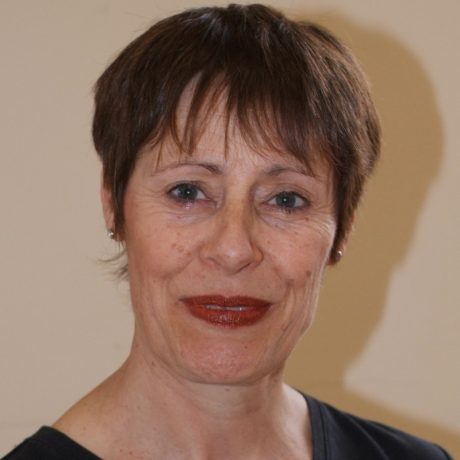 As part of our launch for the ‘Early Years | A Common Approach‘, Music Mark has worked closely with a number of Early Years music specialists to develop a programme of resources for music teachers who are starting to work with early years children for the first time. In this Q&A, Sue Nicholls, a member of the Steering Group who worked to create this new area of the programme, shares insights from the development process and advice for using the resources in practice.
Q: Who is the ‘A Common Approach: Early Years’ resource designed for, and how should educators go about using it in their practice?
A: This resource is designed for educators with musical training, but who are not Early Years specialists. This group will include instrumentalist staff employed by Music Hubs (music services) who are contracted to deliver general music lessons in primary schools, and who may also lead music sessions with the youngest pupils in these settings.
The ‘A Common Approach: Early Years’ resource should be seen as a supportive guide for those required to deliver music in Early Years settings. The material is presented for two stages: ages 3-4 and 4-5, i.e. Nursery and Reception classes (in England and Wales) or Nursery and P1 classes (in Scotland and Northern Ireland).
The resource is governed by principles that define the key educational values and standards for educators working with this age group. The content is presented very clearly in Programmes of Study, each of which is grouped into six ‘Areas’. These ‘Areas’ focus on different aspects and organisational approaches to Early Years music-making; there is also a glossary to explain any unfamiliar Early Years terminology.
The material is accessible, readable and offers a comprehensive collection of workable ‘tried-and-tested’ ideas, activities and musical starting points. For me, one of the resource’s most attractive features is its straightforward and practical approach, incorporating useful advice from a team of experienced practitioners … for example: educators, more familiar with pupils who sit, listen and participate in music lessons, are given ideas and approaches for exploring a ‘freer’ delivery style that will, hopefully, engage and involve young children, who are accustomed to wandering freely round the space. One contributor who worked on this resource recalled that their first youthful attempt at teaching an Early Years music lesson was about as successful as ‘herding cats’!
A vast amount of practitioners’ experience and knowledge has been incorporated into the ‘A Common Approach: Early Years’ resource, making it an invaluable source of information and practicality.
Q: Can you share some insight into how the resource collection was developed? What was the process like behind the scenes?
A: A team of about a dozen contributors – all very experienced Early Years music practitioners – worked on compiling this new resource, under Catherine Brentnall’s excellent leadership. Catherine worked on the 2022 ‘A Common Approach curriculum’ and was therefore ideally suited to ‘captain this ship’.
The question of whether the Early Years material would follow the same ‘Areas of musical learning’ as the original ‘A Common Approach’ was a difficult one and led to much discussion and some ‘gnashing of teeth’! Concerns were expressed about whether the highly structured approach of the original resource would be suitable for the Early Years version. However, given that the aim of this resource is to support existing vocal and instrumental teachers, many of whom will already know and use ‘A Common Approach’, the ‘Area’ titles were retained to provide a familiar structural foundation, on which those professionals could build their knowledge.
We realised very early on that this team of ‘experts’ would bring some interesting, and it must be said, forcefully expressed opinions, to this creative task! During our online meetings, we used the ‘breakout rooms’ device, and this proved really helpful in filtering and smoothing out some of our occasionally conflicting views on aspects of the material. The issue of whether to include provision for babies was a lengthy and quite heated debate, but it became apparent that, given the target audience, it was more important to focus on the age groups that a visiting music teacher would encounter in a school or nursery setting.
The team were given regular ‘homework’ tasks! The ‘Areas’ of each Programme of Study were divided between us, and we submitted our individual ideas to Catherine, who spent many hours getting all our ‘ducks’, well maybe, prepositions, in a row, to produce a ‘document’ that was stylistically uniform. No songs, chants or ideas from specific publications were admissible, so any recommendations had to be generic. This all took months, with occasional online meetings to finesse the content of the evolving material.
Surprisingly, and against expectation, this all worked well! The contributors managed to meld their views, ideas, and suggested activities into a pleasing, cohesive end product. Catherine performed her magic, smoothed the rough edges and integrated all the offerings into a homogeneous resource, of which we, the contributors, are justly rather proud.
Q: What advice or tips would you offer to music educators who are interested in expanding their teaching into early years music?
A: Firstly, visit an Early Years setting and observe how the unit works! If you’re accustomed to a more formal style of music teaching, the Early Years environment may come as something of a shock! Children are often allowed to spend time, roaming at will, guiding their own learning through personal interests and play-based activities. Learn from the practitioners who work with this age group, see how they interact with children, how they frame their conversations and how they organise the day-to-day provision to stimulate children’s curiosity, including the outdoor area.
What evidence of musical activity do you observe?
Secondly, if at all possible, arrange to shadow an experienced Early Years music practitioner. A music lesson may appear to have no evident structure or planning, because the practitioner is following the children’s lead or interest that arises ‘in-the-moment’. Notice how they engage the children; the songs they choose and, importantly, the pitch at which they sing them; the instruments and sound-makers they incorporate into their sessions; and which accessible musical resources they provide for child-centred exploration afterwards.
Thirdly, of course, read, digest and apply the contents of the ‘A Common Approach: Early Years resource’ found on the Music Mark website!
Q: In which ways can this resource support those delivering music education to young children, and what do you personally enjoy most about teaching music in the early years?
A: As I’ve said throughout this blog, this resource is full of usable and interesting ideas, both strategic and practical; it is a well-stocked bank of supportive and creative scaffolds for establishing successful and fulfilling music sessions with Early Years children.
I love working with the Early Years, but, sadly, I don’t do this as nearly as often as I’d like. I just revel in the different ways that these early learners engage with music and their extraordinary inventiveness. I remember leading a session with 4-year-olds, using a Lycra sheet, on which we bounced a toy frog, co-creating a song about his imagined life. When the session ended, I noticed that the children, having no Lycra sheet in the setting, substituted a doll’s cot blanket, on which they bounced a Teddy, repeating the activity, but singing their own new ‘Teddy’ song … such a lovely, spontaneous outcome!
My work is now directed more at training Early Years practitioners, which is, of course, hugely rewarding and great fun. I’ve written several books to encourage non-specialist Early Years practitioners to engage with music provision. Spreading the word about the potential for developing children’s musicality has been a very valuable part of my writing life.
Explore Sue’s work:
Singing Circles – A Collection of Early Years Songs
Collins Primary Music – Early Years Foundation Stage