Music Mark 2026 Spring Summit in Review
27th March 2026
Orla Deegan is a second-year Music (Bmus) student at Cardiff University. She has been undertaking a placement with Music Mark over the past few weeks as part of her Business of Music module. This placement has provided her with the opportunity to participate in several in-person and remote events, including the Spring Summit, offering her a clearer understanding of how the music education sector operates.
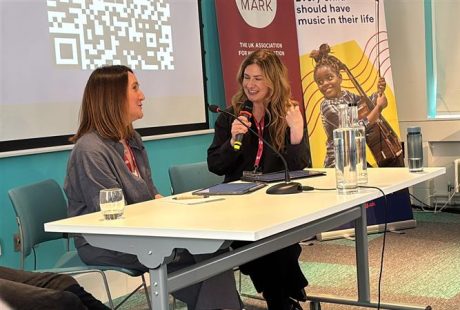 The Spring Summit provides a networking and social opportunity for Hub Leaders, as well as other Music Education Professionals, to share ideas and discuss current problems within the sector. This year it took place on Friday 13th March at Friends House, Euston, and held sessions by the Department for Education, Music Masters, Oxfordshire County Music Service, and Sarah Upjohn (Physiotherapist).
The day opened with a discussion for the Hub Leaders, led by Bridget Whyte (Music Mark CEO), allowing concerns to be voiced regarding the plans for the National Centre for Arts and Music Education as well as the impacts on music education due to the Schools White Paper: Every Child Achieving and Thriving, released 23rd February 2026. This provided a brilliant chance to collect everyone’s thoughts before Stefano Pozzi (Department for Education) gave an update following these changes and answered any questions.
Spring Summit Spotlight: Inspiring Inclusion Through Music Therapy, Alternative Provision & SEND Innovation
This session by Oxford County Music Service (OCMS) provided an inspiring example of how Music Services can integrate music in a therapeutic manner to support the mental wellbeing of children in the county and how this also has educational benefits. Led by Emma Coulthard (Head of OCMS) and Andy Stevens (Lead for Health & Wellbeing), we were informed of the steps they had taken to achieve this powerful change. Andy Stevens has been hired by OCMS relatively recently and his job position is rather specific; OCMS sought for an experienced licensed Music Therapist to fill the position of Lead for Health & Wellbeing. The aim of this was to create a new strategy for Music for Health and Wellbeing, whilst developing Alternative Education Provision using music as a tool to prevent exclusion.
OCMS already ran Music for Wellbeing sessions led by unlicensed Music Therapists inside and outside of school settings; however, they felt that this addition would help reach more children and add to the outstanding impact they are creating. They used a case study of a student with SEN to exemplify the social and communicative benefits it also has. They provided a brief explanation of how they got around the barriers of including Music Therapy (e.g. running sessions in a home environment) and offered support to any music services who would like to implement a similar addition to their services.
The Musical Athlete: Current Thinking from a Physiotherapist, Sarah Upjohn
The physical demands of a musician are widely overlooked. I have been lucky enough to receive multiple talks on this subject from visiting lecturers in University. I had not, however, ever even considered it as an issue prior to my A levels, despite having had a demanding musical timetable then, so it is amazing that Sarah Upjohn was able to present the idea of a musician on par with the physical stress as an athlete to music education professionals and teach them ways to incorporate it earlier in life was phenomenal. Sarah Upjohn gave an overview of the muscles used when playing the majority of musical instruments and provided examples of stretches to do before, during and after musical activity to help protect our muscles and prevent issues. She also explained how factors including fatigue, stress and illness can contribute towards the likelihood of injury. During the Q&A at the end of this session many hub leaders were curious about how to implement this in their educational settings and Sarah Upjohn provided examples of how you can both teach this in ensembles, instrumental lessons, and in the classroom.
The Music Masters session focused on the issues surrounding relevant training for instrumental teachers trying to reach higher salaries. The current solution is a PGCE in music, with the QTS allowing you to charge more. These PGCE’s do not actually prepare you for instrumental teaching as they are designed for classroom teachers. Music Masters also highlighted that if views changed and their Musicians of Change PGCEi, which does not grant a QTS, but does train you in instrumental teaching, was viewed as a respectable qualification for instrumental teachers, it would help teachers reach higher salaries.
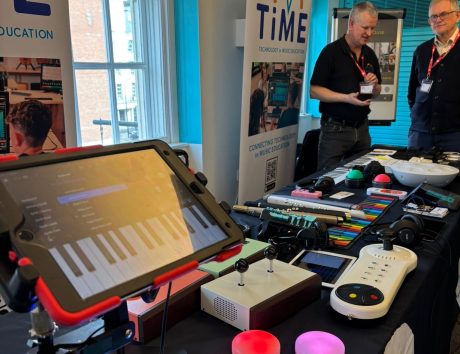 Providing even more food for thought, TiME (Technology in Music Education) held a stand presenting the inclusive musical instruments available to purchase in the UK (including the Clarion and various instruments by Odisei music and Funki) showing ways that music can be accessible to all children in the UK.
TiME is also bookable for sessions for both staff and students to try out some of these different instruments.
At the end of the day, Bridget Whyte expressed her gratitude for everyone attending her last Spring Summit as the CEO of Music Mark, and Peter Smalley (Chair) gave a short speech thanking her.
I’m sure anyone who was at the Spring Summit would agree that the day was successful in laying out the next steps for the music sector following upcoming changes, informative in topics that some organisations might not have considered but most importantly an extremely enjoyable way of networking and meeting people with shared passions for the music education sector and I am extremely grateful that I got to experience an event like this.
Make sure you join us at the Summer Summit on 3rd July.