Making Whole-Class Music More Inclusive
9th October 2026
Through its Music-Makers Whole Class programme, OHMI brings specialist expertise in adapted instruments and equipment.
Ahead of OHMI’s session at the Music Mark Conference 2026, we spoke to Zoe Hunting from Southampton and Isle of Wight (SIOW) Music Service about how their partnership with OHMI began, and how their combined approach is helping more children with additional needs take part in whole-class music.
What is the Music-Makers Whole Class Programme
OHMI Music-Makers is a whole-class teaching support programme designed to give pupils with physical impairments equal access to whole-class music lessons. Working through funded partnerships with selected music services and hubs, OHMI uses its Reveal system to survey participating schools and identify pupils who may need support before lessons begin. A pre-lesson assessment helps match each pupil with an adapted instrument or piece of equipment that is as close as possible to what their classmates are playing. OHMI then allocates the equipment and supports music services and teachers with the guidance and resources needed to fully include the pupil. Alongside meeting individual needs, the programme helps each partner music service build a stock of adapted instruments and equipment for future use, with the wider goal of enabling every pupil to take part in music-making alongside their peers.
 Finding the right instrument
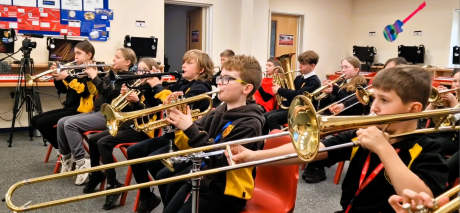
A central part of the programme’s success is the specialist training and guidance OHMI provides on assessing a child’s physical movement and on setting up and using adapted instruments. SIOW Music Service then puts that knowledge into practice with its staff and pupils. At the start of each academic year, the service reminds teachers what is available and where to go for support. Through this shared approach, staff now have a much better understanding of the adapted instruments and equipment available and how to access it for small-group and one-to-one teaching. The process continues as a dialogue, with OHMI reviewing the service’s equipment applications and, where another option may be a better fit, suggesting an alternative.
Options include:
- straps that hold a ukulele in a comfortable position
- bow holders that support a string player’s grip and bowing
- stands that keep instruments ready to play, so the child does not have to lift and position it each time
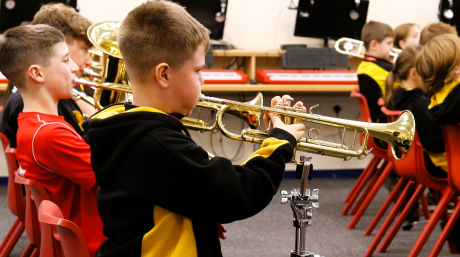
- pocket trumpets that are shorter than standard instruments and work well for children of short stature
- lighter plastic instruments and electronic alternatives such as the Artiphon Instrument 1
Inclusion mens belonging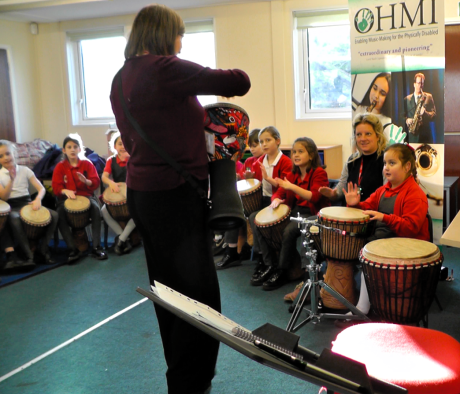
The partnership has also shown the value of giving pupils time to explore different options. One pupil had limited mobility and coordination, and the first instruments he tried were not the right fit. A plastic trombone worked better and allowed him to join a group playing tenor horns in the same key. With OHMI’s range of possible adaptations in mind, the school adjusted its usual approach so pupils could try different instruments over the first two weeks, giving him the time and space to find one that suited him.
Similarly, a child with limited range of movement in one arm enjoyed using a pocket trumpet and a one-handed recorder, as both let him play much like his classmates. When the class moved on to ukuleles, he tried an Artiphon because a standard ukulele needed more two-handed dexterity. This worked less well for him, largely because it felt so different from the instruments everyone else was playing. For both organisations, partnership working is not simply about finding a device that functions. The right adaptation should also help a child feel part of the group. An instrument can be accessible and still leave a pupil feeling separate from their classmates, so the music service’s classroom insight and OHMI’s specialist guidance need to be considered together.
Making it work in schools
OHMI’s flexibility and quick response, even when the SIOW team has not been able to meet the preferred timescales, has been key to the success of the programme.
One of the biggest practical challenges for the partnership is ensuring that the music service has information about which children will be joining the whole-class programme and what support they might need. With enough notice, SIOW Music Service can work with OHMI to arrange equipment or adapt the range of instruments offered to a school.
 The partnership’s impact and next steps
Since SIOW Music Service and OHMI began working together, Southampton’s whole-class programmes have become more inclusive, and staff have seen children using adapted equipment become more engaged. The next stage for the partnership is to think about progression. The team does not yet know how many of these children carry on learning an instrument after their year of whole-class lessons, so SIOW staff plan to speak with parents and explore what follow-on opportunities might look like. OHMI also supports individual lessons, offering a potential area for the partnership to develop further.
By bringing together OHMI’s knowledge of adapted instruments and music service’s understanding of pupils and school settings, the programme has helped staff think differently about other parts of their teaching. Anna, who is a peripatetic teach for SIOW Music Service, has been exploring tactile ways to teach ukulele chords. That approach could support children in other settings too, including those with significant visual difficulties. Staff can now start with what a child needs, try an instrument and adjust the approach until they find a way for that child to make music alongside everyone else.
Don’t miss your chance to join the OHMI session, as well as many more inspirational talks at the Music Mark Conference 2026 on the 16th and 17th November, in Liverpool. The full programme is available to explore here, and don’t forget to book your tickets now!