How the Arts Power a Healthier Wales
20th February 2026
Assessing the Economic Impact of the Arts on Health and Healthcare Services in Wales provides the first national economic evidence of how participation in the arts supports health, wellbeing and public services in Wales.
 Commissioned by Arts Council Wales and developed in collaboration with the Centre for Health Economics and Medicines Evaluation (CHEME), Bangor University, and the Research Centre for Arts and Wellbeing at Edge Hill University, the study shows how creative engagement delivers measurable benefits for individuals, communities and the economy, while helping to ease pressure on health and care services.
A collaboration between scholars in health economics and arts wellbeing from Bangor University and Edge Hill University, this report looks at how taking part in artistic activities – from creative classes to cultural events – can boost mental and physical health, and in turn take pressure off health and care services. It also evidences what many already believe:
‘Comparing the economic impacts generated by the arts in Wales with evidence of preventative public health interventions, the evidence of this report suggests investments in arts programmes and interventions can offer strong value for money compared to other alternatives when considering investment into health promoting and disease preventing initiatives in Wales.’
The report estimates that involvement in the arts generates approximately £588 million in health, wellbeing, and productivity benefits for Wales each year. This stems from people feeling better, connecting more with others, and seeing improvements in both mental and physical health, all of which contribute to a healthier, more productive society. Even if these numbers are on the cautious side, they show how much arts activity really matters.
The results are equally noteworthy when it comes to public investment. Every £1 invested in multi-year funded arts organisations delivers around £11 in benefits for health, wellbeing and productivity. In a context where public funding and preventive health approaches are under intense scrutiny, this return highlights how strategic arts investment can complement other public health initiatives.
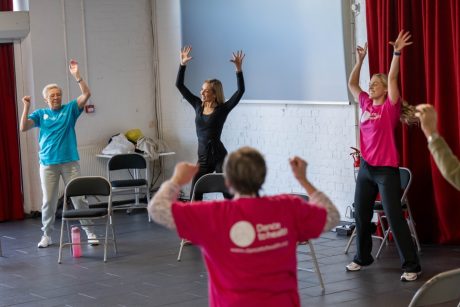
The report presents real stories and examples, including how dance classes for older adults help them remain steady and strong, which could mean fewer falls and less strain on healthcare. Similarly, there is evidence in the report that creative activities for kids and teens take pressure off mental health services, and that arts projects have helped cut down on unnecessary GP visits for adults dealing with mild or moderate mental health issues. The report states:
‘If just 5% of these adult mental health GP appointments were avoided through engaging with arts-based programmes, this would generate savings of £17m per year….If 5% of the young people referred to Childhood and Adolescent Mental Health Services (CAMHS) in Wales engaged in specialist arts programmes as part of their treatment pathway, £9.5m in mental health and wellbeing benefits would be generated.’
When healthcare staff engage with the arts, their wellbeing improves, which could lead to fewer sick days and a more resilient NHS workforce.
These findings reflect the ambitions of the Wellbeing of Future Generations (Wales) Act, as well as national frameworks on culture and mental health. By showing how the arts can contribute to prevention and whole-person care, it encourages health services, cultural groups, schools, and local communities to work together.
This report shows the arts aren’t just a cultural luxury; they’re a real force for community wellbeing, public health, and a stronger economy in Wales. If we continue working together and build on this evidence, creative engagement can bring even greater benefits to everyone.
Find out how Music Mark is advocating for the continued prioritisation of Music Education in Wales.