How music education organisations can reduce travel emissions
11th November 2025
The following case studies from our research into environmental sustainability practices in music services, education hubs and partner organisations, undertaken by UCL’s Department of Culture, Communication and Media, highlight how music education organisations can reduce travel emissions. Read on to learn about Leicestershire Music’s music technology delivery model and Waltham Forest Music Service’s zero-emission delivery service.
A pioneering teacher-led music technology delivery model
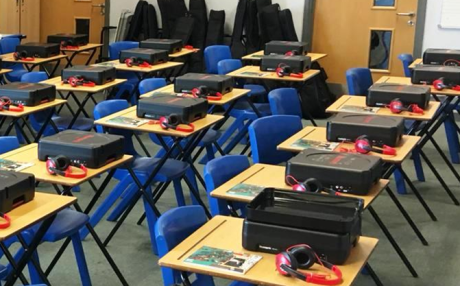
Leicestershire Music’s tech delivery model demonstrates innovation, environmental responsibility and value for money
At Leicestershire Music, we’ve proudly championed a pioneering teacher-led music technology delivery model, developed by Bradley Smith over eight years ago. Originally centred on whole-class turntablism projects, the approach has evolved into a flexible, classroom-ready system enabling non-specialist teachers to deliver high-quality music tech lessons independently. By reducing the need for weekly in-person delivery, the model cuts staff travel—boosting reach while supporting environmental goals.
From turntablism projects alone, we estimate over 5,000kg of CO2 emissions have been saved. The model has allowed us to reach more pupils and classes—especially in rural areas—while upskilling teachers and embedding long-term capability in schools. Its success led to increased demand, prompting expansion of our music tech team, while also freeing senior staff to focus on strategic development.
Now adopted by 11 other music services nationally, this scalable, sustainable model stands as a leading example of innovation, environmental responsibility, and value for money in music education.
With thanks to Leicestershire Music
A zero-emission delivery service
Waltham Forest Music Service (WFMS) has adopted environmentally sustainable practices in its instrument delivery operations by partnering with ZED, a zero-emission delivery service. ZED utilises electric vehicles and bike carriers to transport musical instruments across the borough, significantly reducing the environmental impact of these activities. The use of electric vehicles ensures that no harmful emissions are released during transport, contributing to cleaner air and a reduction in the borough’s carbon footprint. Additionally, the bike carriers provide a sustainable option for shorter distances, further decreasing reliance on fossil fuels. This approach not only supports WFMS’s commitment to environmental responsibility but also aligns with the broader goals of promoting green transport solutions within the community. By integrating these eco-friendly practices, WFMS sets a strong example of how local services can reduce their environmental impact while maintaining efficient, reliable operations for the benefit of students and schools across Waltham Forest.
With thanks to Waltham Forest Music Service

Don’t forget to visit the This Is Not A Rehearsal webpage to explore more news, training & events, resources and research to support you on your sustainability journey.