Bridget’s Blog: The Labour Party Conference
8th October 2025
Music Mark has three key aims: to support, connect and influence. This final aim is highly valued by our membership, and we are proud of what we’ve achieved in terms of advocacy over the years. Much of that advocacy has been through building strong relationships with civil servants and arms-length policy makers such as Arts Council England and the Welsh Local Government Association, as well as our campaigns. Where necessary, we do what we can to raise concerns around funding, supporting the workforce and equity of access to provision through writing letters, and there have been some notable successes.
We have, however, recently started to explore a new way to reach those who have the power to effect change: by building a network of MPs who agree with our vision for music education and can support us in our advocacy.
As a membership association containing local authorities, Music Mark needs to be careful with the political activities we undertake, and indeed, our funding from Arts Council England (which is so valuable in expanding our support for the sector) can’t be used for political activities at all. However, we also know that to get our messages to where they need to be heard, we need to rub shoulders with parliamentarians!
Events such as the APPG for Music Education and receptions at Westminster can help, and we are grateful to the ISM for the work they do as the secretariat for the APPG for Music Education to profile both Music Mark and its members in meetings. In addition, however, we’ve made a conscious decision over the last two years to take our messages directly to the ruling party – Labour – by attending their annual conference.
When Labour came into power, they had lots of great statements about the value of music and arts education, and last year’s conference was full of excitement and anticipation. However, as we headed to Liverpool this year, the plans behind these statements were yet to be published, which meant that many of the minister’s responses to questions and contributions to debates were limited in terms of new information.
The key plans we’re waiting on include the Curriculum and Assessment Review, which is due, and we think it might be out within the next few weeks. Until it is, we won’t know how far Labour are prepared to go to bring the arts back into the heart of the curriculum. Similarly, we are awaiting more information about the National Centre for Arts and Music Education. But having heard no further details since summer, we still don’t know really how that will have an impact on schools.
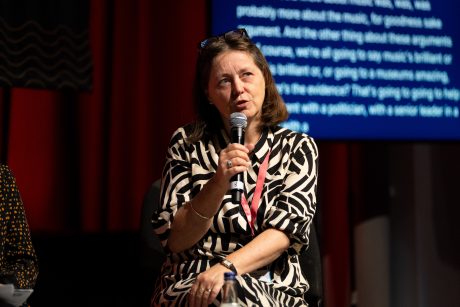
More positively, though, attending the Labour Conference allowed us to talk to MPs and Peers; to share information about the work of the music education ecology, tell inspirational stories of activity and outline the challenges facing the sector. We kept the conversation positive about the Curriculum and Assessment Review, and the National Centre, but pointed out that without more teachers in and beyond the classroom, the ambitions within both will be impossible to realise. We talked about equity and the challenges that the sector faces in providing musical learning to all. We noted that a focus on the creative industries and their value to the UK’s economy is dependent on a pipeline which doesn’t fracture because of a lack of funding and access.
We came away from the conference feeling that we’d been heard, both in the education and culture space. We now need to follow up on conversations as Labour’s promised plans begin to be shared, and we also need to consider how we connect with the other parties to garner their support too!
As always, and regardless of any upcoming announcements, we will continue to advocate for the importance of music education for all and work to ensure our voice is heard.